
Beyond the Iron Gate: Section One 150 miles of the Pacific Northwest Trail

Updated: Jul 18
The Pacific Northwest Trail (PNT) stretches over 1,200 miles from the Continental Divide in Montana to the Pacific Ocean in Washington. Its first section, known as "Beyond the Iron Gate," offers a unique introduction to the trail’s diverse landscapes and challenges. This initial stretch sets the tone for the adventure ahead, combining rugged terrain, rich history, and stunning natural beauty. For hikers and outdoor enthusiasts, understanding what lies beyond the Iron Gate is essential for a successful and memorable journey.

Standing across from each other are two 1,000 foot rock walls, This is the entrance way through the Iron Gate where the trail descends from Brown Pass 6,250' to Bowman Lake 4,030'
The Starting Point: What Is the Iron Gate?
Through the "Iron Gate" isn't a literal gate, it feels like one.. if your searching for prehistoric Beasts. It is a Gate of Symbiosis where trail, rock, forest, Bullwinkle and Rocky converge igniting your entry point like a canon ball being fired off into lost hidden Spanish treasure waiting to be discovered marking the beginning of the Pacific Northwest Trail in Montana. It sits near the Kootenai National Forest, where the trail first crosses into the rugged wilderness. This area earned its name from a steep, rocky pass that early travelers described as a natural barrier or "gate" to the wild lands beyond.
Hikers starting here face immediate challenges: steep climbs, dense forests, and unpredictable weather. The Iron Gate represents a threshold between civilization and the untamed landscapes that define the PNT. Understanding this starting point helps hikers prepare mentally and physically for the journey ahead.

Chief Mountain Northern Terminus Border Monument the starting point of the Pacific Northwest Trail and Continental Divide Trail.
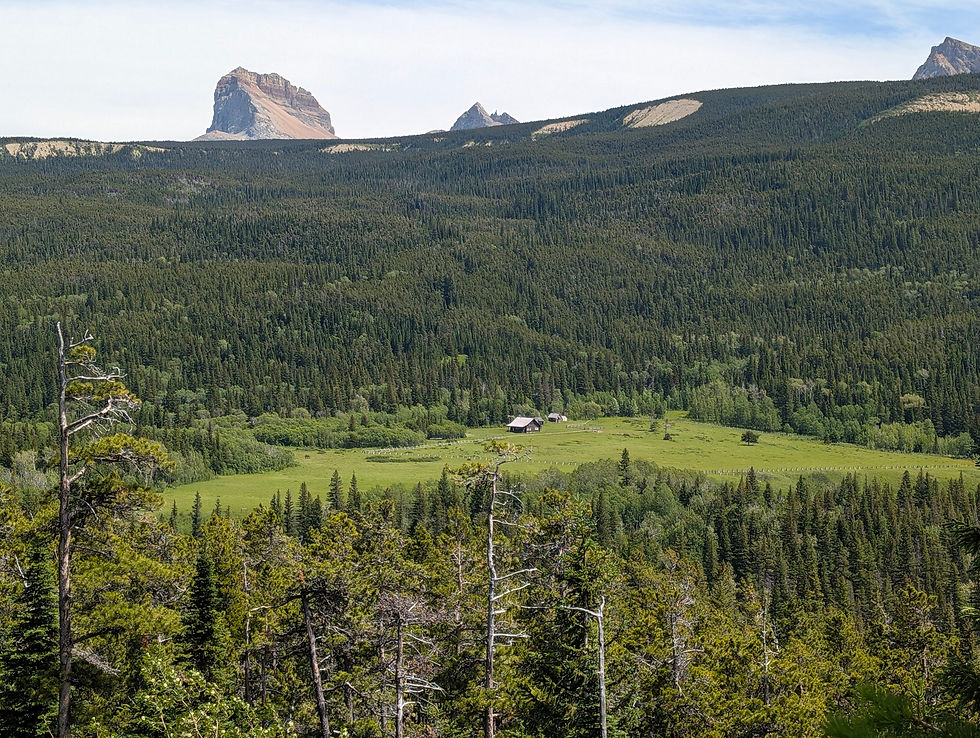
Chief Mountain / GNP: The terrain of section one
In the distance looming high above looking north is the head of Chief Mountain.
Down below nestled in a meadow is the Rangers Cabin where pack mules and horses find rest.
The Green Tunnel:
imagine useing a weed whacker for 55 miles through the GNP (Glacier National Park)
make sure to pack extra Monofilament Nylon Line..
This is massive reach for the sky over growth.
I am standing there with a blank expression like we do when the traffic on the freeway suddenly comes to a stand still.
Blinking my eyes I Balk back,
what trail ? where is it ?

The trail’s elevation fluctuates between 3,000 and 7,000 feet, requiring hikers to be prepared for both steep uphill climbs and descents that parallel creeks flowing down from Mountain Passes. The landscape changes with the seasons, from wildflower blooms and massive overgrowth in summer to snow-covered paths in early spring and late fall ys and distant peaks Clear streams and alpine meadows that provide water sources and rest spotsRocky passes that test balance and endurance
Wildlife and Natural Features to Watch For:
The Eastern Marmot French Resistance at Stoney Indian Pass PNT Mile 17.9

No Joke, The French have been navigating these high divide passes since the Fur trade era of the early 1800's while history books focus on the voyageurs; the real, long-standing resistance squadron at Stoney Indian Pass has been holding close the 49th Parallel These brave few are the keepers of the passage though the Iron Gate to the kindred of the Pacific.
From Grizzly to Black Bear from berry patch to river
Deer and elk grazing in meadows or crossing trails
Bird species such as bald eagles, woodpeckers, and mountain bluebirds
Smaller mammals like marmots, squirrels, and chipmunks
H20 planning:
Water sources through the 55 miles of GNP (Glacier National Park) are robust.
streams, creeks, rivers, lakes and snow.

"Hiker FYI; After Polebridge the water situation entering into Flathead National Forest and Kootenai National Forest requires pre-planning; Hikers must be be on top of this at all times. Plan on carrying extra water through high ridge areas where there are 9 - 11 mile stretches with no H20. For Dry Camping I recommend 3 1/2 - 4 liters carry between reliable water resources.
Preparing for the Journey
Starting the Pacific Northwest Trail at the Iron Gate requires careful preparation. Here are some practical tips:
Gear up for variable weather: Breathable Layer Materials inner and outer garments, Chrome dome Carbon Hiking Umbrella, Rain Pancho (Frogg Toggs Rain Poncho with hood are only 20 Bucks) ultralight synthetic jacket with hood, Trail Runners are essential for drying out and ultralight boots have good ankle support...(I perfer trail runners)
Plan Resupply for Polebridge. The Mercantile is incredible and good I shipped my resupply from Whitefish Montana UPS for 27 Bucks
Navigation: Carry detailed maps, a compass, and a GPS device. Cell service is limited.
Understand bear safety: Carry bear spray and know how to store food properly.
Physical conditioning: Train for steep climbs and long days on uneven terrain.
Ask Seek communicate:
Local ranger stations near the Iron Gate can provide updated trail conditions and advice.
Highlights Recommended Stops
If avaible have the Ranger Book you a spot into Hiker Trail Camp at Browns Pass PNT Mile 35.6 This is High Alpine at its finest near a creek, surrounded by a Cathedral this is alsowhere the decent to the entrance way of the Iron Gate is at.
It is totally worth seeing...A Ranch style River Cabin, The North Fork Hostel in Polebridge 20 bucks gets you a tent spot with hot showers and a place to wash your stuff by hand with a hanging station, The front yard has a solar station with a 110V converter for the super fast recharges. The Mercantile is just up the road.
The Wam Cabin at PNT Mile 46.8 is incredible with 360 Degree Views, its free all the side windows open up there are two beds and a fully working wood stove. Restored from its original construction in 1930's. Make sure to bring enough water for dry camping.
Taking time to enjoy these highlights enriches the hiking experience and connects travelers to the region’s natural heritage.
Challenges to Expect
The first section is not without its difficulties. Hikers should be ready for:
Steep and rocky trails that require careful footing
Changing weather, including sudden rain or snow showers
Limited trail markings in some areas, making navigation tricky
Potential wildlife encounters that demand caution and respect
These challenges make the journey rewarding but require respect for the environment and thorough preparation.
Tips for a Successful Hike Beyond the Iron Gate
Start early each day to maximize daylight hours.
Travel with a partner or group when possible for safety.
Keep a steady pace and take breaks to avoid exhaustion.
Leave no trace: pack out all trash and minimize impact on the environment.
Stay informed about trail conditions through official sources.
What Comes After Section One?
Completing the first section beyond the Iron Gate opens the door to the rest of the Pacific Northwest Trail. The trail continues through diverse landscapes, including the Selkirk Mountains, Glacier National Park, and the Cascade Range before reaching the Pacific Ocean. Each section offers new challenges and rewards, but the foundation built in the first miles is crucial.
Final Thoughts on the Journey Beyond the Iron Gate
Starting the Pacific Northwest Trail beyond the Iron Gate is a test of endurance, skill, and appreciation for nature’s raw beauty. This section introduces hikers to the trail’s spirit: a blend of solitude, challenge, and discovery. Preparing well and embracing the journey’s demands will lead to unforgettable experiences and a deep connection to the Pacific Northwest’s wild heart.
If you plan to hike this section, take the time to research, train, and equip yourself properly. The trail beyond the Iron Gate is waiting to reveal its secrets and inspire your next great adventure.


Comments